Oregon State University
Natural Resources Undergraduate
Urban Forestry Management Focus
Explore
Natural Resources
What's the Problem with the Emerald Ash Borer?
Imagine walking through a familiar forest, only to find once-thriving ash trees standing lifeless, their bark stripped away by an unseen invader.

A grove of Ash Trees devastated by the EAB.
istockphoto Credit: 2ndLookGraphics
The Emerald Ash Borer (EAB) is a highly destructive invasive beetle that has caused widespread devastation to ash tree populations across North America and parts of Europe. Originally from Asia, EAB was first detected in the United States in the early 2000s and has since spread rapidly, killing millions of ash trees and altering forest ecosystems.
This site provides essential information on the identification, life cycle, and impact of EAB, as well as management strategies to help mitigate its spread. Whether you are a homeowner, land manager, student, or simply interested in forest health, these resources will help you better understand this invasive species and its long-term consequences.
By recognizing the signs of infestation and taking action, it is possible to slow the spread of EAB and protect the remaining ash tree populations. Explore the site to learn more about this pressing environmental issue and the efforts being made to address it.
What is an Emerald Ash Borer?
English Common Name: Emerald Ash Borer
Scientific Name: Agrilus planipennis Fairmaire
Order: Coleoptera
Family: Buprestidae
Native Range
Native to parts of Asia, including China, Russia, Korea,
and Japan.
(Natural Resources Canada 2023).

Credit: Снимаю, обрабатываю и выставляю свои фото только сам. via iStockphoto. Agrilus planipennis - Emerald ash borer.
Invasive Range
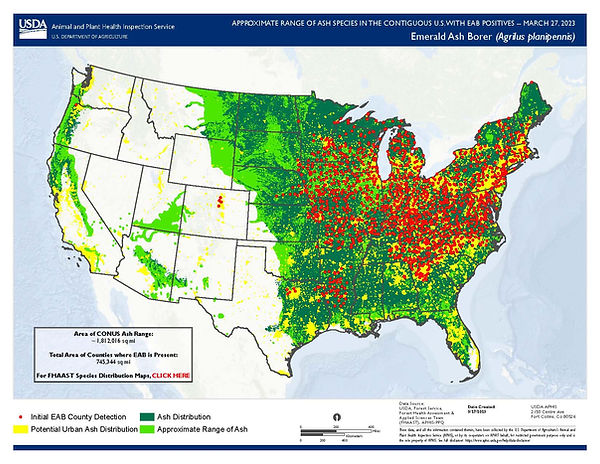
In North America, EAB is considered invasive, having established populations across the eastern United States, parts of Canada, and certain areas of Eastern Europe. In Europe, its range continues to expand westward, with a 2020 report documenting its presence as far as Spain (Dumont et al. 2020).
In North America, the EAB has spread extensively across Canada, particularly through the Great Lakes region and Midwest, extending as far south as Georgia and west to Colorado and Oregon. By 2024, EAB had been reported in 37 states and the District of Columbia (Emerald Ash Borer Information Network 2023).
Physical Description
Emerald ash borers are small, metallic green beetles, measuring 8–14 mm (approximately ½ inch) in length and 3–3.5 mm (about 1/8 inch) in width.
They have long bodies and flat heads, with the undersides of their wings and abdomens displaying bright red or orange coloration. Specimens with variations in color, ranging from nearly black to iridescent copper and even purple, have been observed (Emerald Ash Borer Information Network 2023).
Pupae range from 10 to 15 mm in length and initially appear cream-colored, darkening as they mature (Emerald Ash Borer Information Network 2023). Due to their small size and location beneath the bark, pupae and larvae are often difficult to observe.
Mature larvae measure 25–32 mm in length. They are cream-colored, resembling grub-like worms with bell-shaped segments and brown heads. Lacking legs, larvae possess a pair of pincer-like appendages at the end of their abdomens (Emerald Ash Borer Information Network 2023).
EAB eggs are very small, approximately 1 mm (0.04 inches) in diameter, and are red-brown when fertile. Eggs may be laid singly or in clusters. When initially infesting ash trees, the beetles typically deposit their eggs in the lower crown of the tree, where the bark is thinner and beginning to furrow (Wisconsin Department of Natural Resources 2023).
Adult EABs typically lay 60 to 90 eggs in crevices in the bark of ash trees, usually between June and early July in temperate regions (Wisconsin Department of Natural Resources 2023). Upon hatching, larvae burrow into the tree bark, feeding on the inner tissues. The larvae overwinter, pupate in the spring, and emerge as adults in late spring. As adults, they chew their way out of the bark, leaving characteristic half-circle-shaped exit holes, and are capable of flying up to 10 miles to infest new trees. This cycle continues as EABs spread to additional ash trees (Connecticut Tree Protection Association 2023).
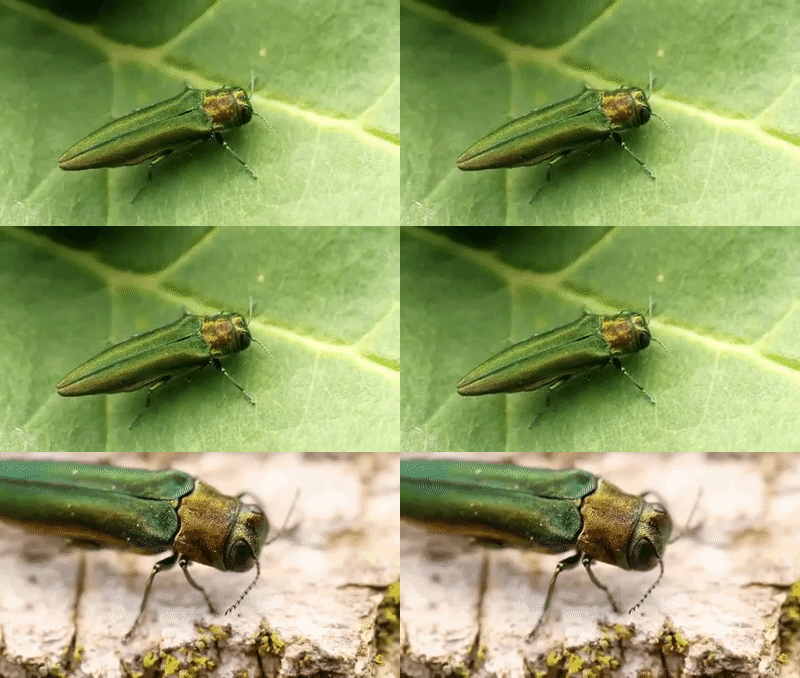
Emerald Ash Borer Heatwoled in action GIFs

nebraska.tv
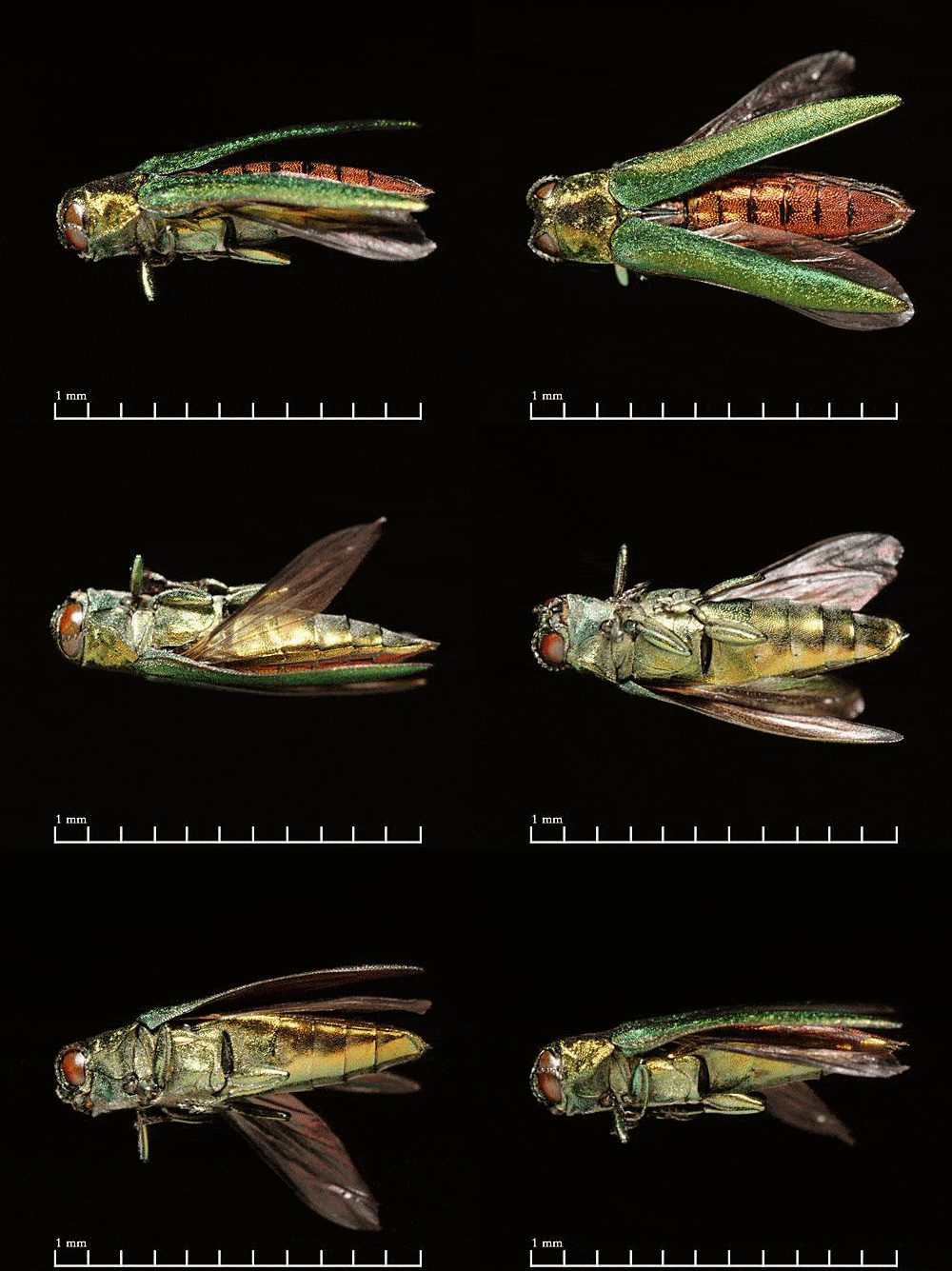
Emerald ash borer. Image by Kent Loeffler.
References Natural Resources Canada. 2023. Emerald ash borer factsheet. Available from: https://natural-resources.canada.ca/forest-forestry/insects-disturbances/emerald-ash-borer-factsheet Dumont, B., Lambert, M.-C., and Messier, C. 2020. Understanding the role of forest structure on the ecology of tree mortality and regeneration in temperate forests. Annals of Forest Science. Available from: https://annforsci.biomedcentral.com/articles/10.1007/s13595-020-0930-z Emerald Ash Borer Information Network. 2023. Emerald ash borer management options: A guide for homeowners. Available from: https://www.emeraldashborer.info/files/1cbcbbc2-f580-4619-b678-df5516fde40c-5ydqa7.pdf Zablotny, J.E., ND. Emerald Ash Borer Larval Screening Guide. Available from: https://www.emeraldashborer.info/files/fb12fea3-f721-4eb2-b265-631bb1c97cdd-3cmu1c.pdf Wisconsin Department of Natural Resources. 2023. Emerald ash borer lifecycle. Available from: https://dnr.wisconsin.gov/topic/foresthealth/emeraldashborer/lifecycle Connecticut Tree Protection Association. 2023. The life stages of emerald ash borer. Available from: https://ctpa.org/the-life-stages-of-eab/
The Natural Resources Field Connection
The field of natural resources encompasses the management, conservation, and sustainable use of our planet’s naturally occurring resources to meet the needs of society and for generations to come. This includes the preservation and health of the natural world.
Professionals in this field work at the intersection of science, policy, and community engagement to address critical environmental challenges, such as biodiversity loss, climate change, and the degradation of ecosystems.
Natural resource practitioners evaluate and manage assets like forests, water reservoirs, soil, minerals, and wildlife populations. Their work involves balancing the demands of human development with the imperative to protect and restore natural systems. This is achieved through habitat restoration, sustainable agriculture, reforestation, and watershed management.

Within the field, professionals often specialize in specific areas of focus, tailoring their expertise to meet unique environmental and societal needs.
For example:
-
Forestry: Specialists in this area manage forest ecosystems to maintain biodiversity, produce timber and related resources sustainably, and help mitigate climate change impacts. (Minnesota Department of Natural Resources)
-
Wildlife and Fisheries Management: These professionals focus on the conservation and sustainable management of animal populations and aquatic ecosystems. Their work often includes monitoring species' health, restoring habitats, and developing management plans for endangered or overpopulated species. (Minnesota Department of Natural Resources)
-
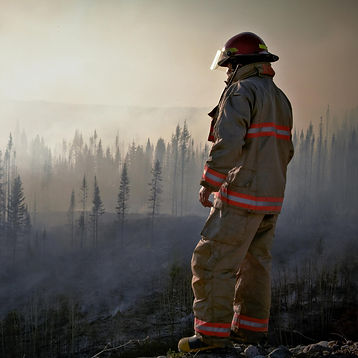
Fire Mitigation and Management: Specialists reduce wildfire risks while preserving fire’s ecological role in adapted ecosystems. They use controlled burns, forest thinning, defensible space strategies, and public education to prevent destructive fires. (U.S. Forest Service)
-
Water Resources Management: Experts in this area address issues like water scarcity, pollution, and watershed degradation. They work on projects ranging from protecting freshwater ecosystems to designing sustainable water-use practices for communities and industries. (Natural Resources Conservation Service)
-
Soil and Land Restoration: Soil scientists and land restoration specialists rehabilitate degraded landscapes, combat desertification, and develop sustainable land-use practices to improve agricultural productivity and ecological stability. (Urban Natural Resources Institute)
-
Urban Natural Resources Management: Urban-focused professionals work on green infrastructure, such as parks, urban forests, rain gardens, and other green spaces to create sustainable and livable cities while supporting biodiversity in urban environments. (EnvironmentalScience.org)
-
Environmental Education and Outreach: These professionals develop programs to educate communities, schools, and organizations about environmental stewardship, conservation practices, and the importance of protecting natural resources. (EnvironmentalScience.org)
-
Environmental Policy and Advocacy: Policy-focused natural resources professionals work with governments, NGOs, and other organizations to develop and implement policies that promote sustainable resource use, conservation, and climate resilience. (CEA Consulting 2025)
-
Renewable Energy and Resource Efficiency: Specialists in this field collaborate with industries to integrate renewable energy solutions and improve resource efficiency, reducing dependence on non-renewable resources while promoting sustainable economic growth. (U.S. Department of Energy)
-
Ecological Restoration/Rewilding: Professionals in this specialization focus on repairing damaged ecosystems, restoring native habitats, and reintroducing native species to areas where they have been lost due to human activities or natural disasters. (Oregon State University )



Collaboration with related fields is essential to natural resource management. Disciplines like ecology, environmental science, sociology, engineering, and law provide vital support, offering the tools and frameworks necessary for comprehensive solutions to problems. Advances in technology, such as GIS and remote sensing, further empower professionals to monitor ecosystems, assess resource availability, and develop data-driven strategies. (Esri 2025)
Natural Resource Management and the Emerald Ash Borer
The emerald ash borer (EAB) is an invasive insect devastating ash tree populations across North America. Natural resource professionals play a vital role in managing its impact through:
-
Monitoring & Research – Foresters and ecologists track EAB spread, study its life cycle, and assess ecological impacts to inform management strategies.
-
Restoration & Replanting – Specialists remove infested trees and replant diverse, native species to strengthen forest resilience.
-
Public Education – Outreach programs teach communities how to identify infestations and prevent EAB spread.
-
Policy & Regulation – Managers work with government agencies to enforce quarantine zones, firewood transport restrictions, and mitigation policies.
-
Integrated Pest Management (IPM) – Experts develop biological controls, such as introducing natural predators, and apply targeted chemical treatments to protect trees. (City of Saint Paul 2025 & Minnesota Department of Agriculture 2025)
As global environmental challenges become increasingly complex, the need for skilled professionals with diverse specializations continues to grow every year and becomes more expansive in scope. Together, these experts play a vital role in protecting the planet’s resources, ensuring sustainability, and fostering harmony between people and the environment. This is illustrated through the efforts of natural resource professionals in the field today and their efforts to quell the damage caused by the emerald ash borer.



References Minnesota Department of Natural Resources. Forestry specialist career path. Minnesota DNR. Available from: https://www.dnr.state.mn.us/careers/paths/forestry-specialist.html. Minnesota Department of Natural Resources. 2025. Careers in natural resources. Minnesota DNR. Available from: https://www.dnr.state.mn.us/careers/index.html U.S. Forest Service. 2025. Fire management careers. U.S. Department of Agriculture. Available from: https://www.fs.usda.gov/working-with-us/careers/fire National Resource Careers. 2025. Find your fit: Water management. Available from: https://nrcareers.org/find-your-fit/water-management/ Natural Resources Conservation Service. 2025. United States Department of Agriculture. Available from: https://www.nrcs.usda.gov/ Urban Natural Resources Institute. 2025. Urban Natural Resources Institute. Available from: https://www.unri.org/. EnvironmentalScience.org. Public education and outreach specialist. Available from: https://www.environmentalscience.org/career/public-education-outreach-specialist. CEA Consulting. 2025. Environmental policy and advocacy. Available from: https://www.ceaconsulting.com/our-work/environmental-policy-and-advocacy/. U.S. Department of Energy. Find careers in the Office of Energy Efficiency and Renewable Energy. Available from: https://www.energy.gov/eere/jobs/find-careers-eere Conservation Careers. Restoration and rewilding careers. Available from: https://www.conservation-careers.com/restoration-and-rewilding-careers/ Oregon State University. 2025. Natural resources undergraduate program. Available from: https://www.forestry.oregonstate.edu/undergraduate-programs/natural-resources Esri. 2025. Natural resources: Overview. Available from: https://www.esri.com/en-us/industries/natural-resources/overview City of Saint Paul. 2025. Emerald ash borer. Saint Paul, MN: City of Saint Paul. Available from: https://www.stpaul.gov/departments/parks-and-recreation/natural-resources/forestry/emerald-ash-borer Minnesota Department of Agriculture. 2025. Emerald ash borer management guidelines. St. Paul, MN: Minnesota Department of Agriculture. Available from: www.mda.state.mn.us/sites/default/files/inline-files/eabmgmtguidelines.pdf
Critical Issue: The Emerald Ash Borer
What’s the Problem with Emerald Ash Borers?
In 2002, a small, gem-like green beetle was identified in Michigan and Ontario: the emerald ash borer (EAB), Agrilus planipennis (Coleoptera: Buprestidae). Experts estimate that EAB first arrived in North America in the mid-to-late 1990s, likely through infested wood packaging materials. (Haack 2015) Since then, EAB has spread to multiple Canadian provinces and 35 U.S. states, killing tens of millions—possibly up to 100 million— ash trees. These beetles feed exclusively on Fraxinus species, the true ash trees native to North America but cultivated worldwide.
Economic Importance
Ash trees play crucial ecological and economic roles. They are widely planted in urban areas due to their adaptability, rapid growth, straight form, and ability to tolerate a range of soil conditions. Their relatively low maintenance, good shade coverage, and resistance to pollution have made them a staple in city greening efforts. (Vega et al. 2025)
In addition to their urban importance, ash trees provide valuable lumber. Their lightweight, elastic, and shock-resistant wood is used in millwork, cabinetry, flooring, and furniture. Ash is also prized for sporting equipment such as baseball bats, hockey sticks, and oars. (Sciencing 2025)
Ironically, ash trees were extensively planted in cities after Dutch elm disease nearly wiped out American elms from the 1960s to the 1990s. (Minnesota Department of Agriculture 2025) Now, history is repeating itself, as EAB threatens to devastate urban and natural ash populations.
Ecological Importance of Ash Trees
Beyond urban landscapes, ash trees are vital components of forests, wetlands, and riparian ecosystems. (Minnesota Department of Natural Resources 2025) They thrive in transitional zones, such as the edges of woodlands and watersheds, where they help regulate water levels and prevent erosion. In wetland environments, species like black ash (Fraxinus nigra) are often the only trees capable of surviving in saturated soils. (USDA Forest Service 2025) These trees also provide critical habitat. For example, the winter wren (Troglodytes hiemalis) has been found to favor ash swamp areas exclusively. Other species rely on ash trees for shelter, nesting, and foraging. (USDA Forest Service 2025)
The large-scale loss of ash trees threatens these ecosystems, potentially disrupting entire food webs and altering hydrological cycles. Ash trees play a particularly important role in wetland ecosystems, where they help control water levels. They actively absorb large amounts of water from the soil, effectively lowering the water table and preventing wetland expansion. This function is critical in areas where black ash dominates, as it acts as a natural regulator of moisture levels. (Northeast Climate Adaptation Science Center 2025)
The Impact of EAB on Natural Resource Management
EAB infestation presents a significant challenge to natural resource professionals, as it leads to widespread tree mortality, habitat loss, and ecological imbalance. Unlike natural disturbances, EAB prevents ash trees from regenerating, further accelerating their decline. (Minnesota Department of Natural Resources 2025)
How Does EAB Kill Ash Trees?
Female EABs lay eggs in the cracks and crevices of ash tree bark. Once hatched, the larvae burrow into the tree, feeding on the vascular system (xylem and phloem) that transports water and nutrients. As they tunnel in an S-shaped pattern beneath the bark, they effectively cut off the tree’s ability to sustain itself. The first visible signs of infestation include canopy dieback and the death of smaller branches at the tree’s extremities. (Government of Manitoba 2025)
During the winter, larvae remain inside the tree and pupate. By April, adult beetles emerge by boring through the bark. Infested trees often lose large swaths of bark, giving them a shaved appearance. After multiple infestation cycles, entire sections of the trunk may be exposed, making the tree more susceptible to secondary infections and infestations.
Although adult EABs rarely travel more than a mile from their emergence site, human activity has significantly contributed to their spread, primarily through the transportation of firewood and infested lumber. (Nebraska Department of Agriculture 2017)

Credit: SBSArtDept via istockphoto


Typical EAB damage found on a felled ash tree in a Dakota county park in Minnesota 2025 by the author.

What Can I do to Help?

Prevention: Stopping the Spread
One of the most effective ways to slow EAB is by restricting the movement of firewood. Many state and national parks now require visitors to use only locally sourced firewood to prevent the accidental introduction of invasive pests. Additionally, using fine mulch or wood chips smaller than one inch can reduce the risk of spreading larvae. (New York State Department of Environmental Conservation 2025)
Management Strategies
Natural resource professionals use a variety of strategies to combat EAB, including:
• Monitoring & Research – Foresters and ecologists track EAB spread, study its life cycle, and assess its ecological impacts. This research informs management strategies.
• Restoration & Replanting – Specialists remove infested trees and replant diverse, native species to increase ecosystem resilience.
• Public Education & Outreach – Educators teach communities how to identify EAB infestations and take preventive measures, such as using only local firewood.
• Policy & Regulation – Natural resource managers collaborate with government agencies to enforce quarantine zones, regulate wood transport, and implement mitigation policies.
• Integrated Pest Management (IPM) – Scientists develop biological control methods, such as introducing parasitic wasps that target EAB larvae, as well as targeted chemical treatments for high-value trees.
Hope for the Future: Resistant Ash Trees
Despite the widespread devastation caused by EAB, some ash trees have shown signs of resistance. Geneticists are studying these trees to develop EAB-resistant varieties that could help restore affected forests. (National Institute of Food and Agriculture2025). The USDA encourages the public to report potentially resistant ash trees, as studying their genetics may offer long-term solutions to ash conservation.
References Haack, R. A. 2015. Emerald ash borer: Biology, ecology, impacts, and management. Newtown Square, PA: USDA Forest Service Northern Research Station. Available from: https://www.fs.usda.gov/nrs/pubs/jrnl/2015/nrs_2015_haack_001.pdf Vega, F. E., and colleagues. 2025. Emerald Ash Borer and Its Impact on Ash Trees. Journal of Integrated Pest Management 14 (1): 14. Available from: https://academic.oup.com/jipm/article/14/1/14/7235956 Sciencing. 2025. Properties of Ash Wood. Available from: https://www.sciencing.com/properties-ash-wood-5463688 Minnesota Department of Agriculture. 2025. Dutch Elm Disease. Available from: https://www.mda.state.mn.us/dutch-elm-disease Minnesota Department of Natural Resources. 2025. Emerald Ash Borer. Available from: https://www.dnr.state.mn.us/invasives/terrestrialanimals/eab/index.html USDA Forest Service. 2025. The Future of the Ash Tree. Available from: https://www.fs.usda.gov/about-agency/features/future-ash-tree Northeast Climate Adaptation Science Center. 2025. Rising Ashes: What Happens When Trees Disappear from the Forest. Available from: https://necasc.umass.edu/news/rising-ashes-whathappens-when-trees-disappear-forest Minnesota Department of Natural Resources. 2025. Emerald Ash Borer. Available from: https://www.dnr.state.mn.us/invasives/terrestrialanimals/eab/index.htm Government of Manitoba. 2025. Emerald Ash Borer – How to Destroy Infested Ash Trees. Available from: https://www.gov.mb.ca/stopthespread/fis/eab/eabs-destroy.html Nebraska Department of Agriculture. 2017. Recommendations to reduce the spread of emerald ash borer. Available from: https://nda.nebraska.gov/plant/entomology/eab/Recommendationsto-reduce-spread-of-EAB-012017.pdf New York State Department of Environmental Conservation. 2025. Emerald ash borer (EAB). Available from: https://dec.ny.gov/nature/animals-fish-plants/emerald-ash-borer-eab National Institute of Food and Agriculture. 2025. Land-grant universities key to managing devastating emerald ash borer. Available from: https://www.nifa.usda.gov/aboutnifa/impacts/land-grant-universities-key-managing-devastating-emerald-ash-borer
Entomology, Technology, and Society in Managing the Emerald Ash Borer
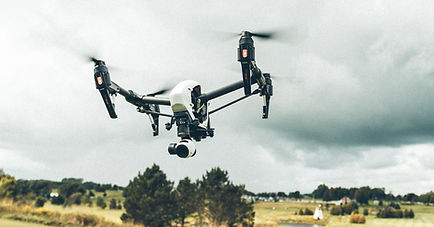
When faced with an ecological crisis, the best approach is to understand the root cause and all contributing factors. Many entomological problems require advanced technological solutions, such as combating insect-borne diseases like the Zika virus. Others, like the emerald ash borer (EAB) (Agrilus planipennis), seem relatively low-tech in nature. However, because of its connection to human activity, EAB continues to spread rapidly, often unknowingly facilitated by everyday human actions. The most likely scenario for its introduction to North America is through global trade, where it was transported unintentionally in wood packing materials. The unintentional spread of invasive species has been documented for centuries, illustrating how anthropogenic interference is inseparable from ecological change.
Fortunately, advancements in technology have significantly
improved our ability to monitor and manage EAB infestations.
Geographic information systems (GIS) and drone technology have
been crucial in tracking EAB’s spread and identifying areas of high
infestation risk. (Iverson et al 2006) These tools also aid in locating
genetically EAB-resistant ash trees, which can be cloned to create
future forests with increased resilience. Data analytics allow
researchers to predict where EAB is likely to spread next, helping
policymakers implement stricter regulations on transporting
infested wood.
In direct control efforts, drones have been equipped with insecticide to spot-treat the crown of ash trees, an alternative to traditional soil and trunk injection methods. (AcuSpray 2023) Additionally, biological control has been explored as a long-term solution. The introduction of parasitoid Spathius wasps, which naturally prey on EAB larvae, has shown promise in reducing populations. (Sydnor et al. 2007) Another emerging solution is a fungal-based insecticide that uses EAB itself as a host, creating a self-perpetuating cycle of control with minimal human intervention. However, the long-term ecological impacts of this fungal treatment remain uncertain, and large-scale application is impractical in forest environments, though it may be viable in urban settings. (Sydnor et al. 2007)
The intersection of entomology, technology, and society in the fight against EAB illustrates both the strengths and limitations of human intervention. While genetic research, data modeling, and biocontrol offer new possibilities, they also raise ethical and practical questions. Should we prioritize genetic modifications to create resistant ash trees, or should efforts focus on encouraging natural adaptation? To what extent should we introduce non-native predators, knowing that their long-term effects on ecosystems remain uncertain? These questions underscore the broader challenge of balancing scientific innovation with ecological sustainability, ensuring that technological advancements align with both environmental health and societal needs.
Ash trees have long been a staple in urban landscapes, valued by city planners for their ability to provide shade, enhance aesthetics, and improve air quality. However, the emerald ash borer (EAB) invasion has forced urban foresters and city officials to make difficult decisions regarding the management of these trees. Some cities have opted for mass removal to eliminate safety hazards and disrupt the beetle’s life cycle, while others—particularly those with fewer ash trees—have pursued quarantine measures or targeted treatments. In recent years, some municipalities have begun planting EAB-resistant ash clones as a long-term solution. Often, cities implement a combination of these strategies, balancing removal, treatment, and replanting. This all depends upon the resources available and can vary widely in affected areas.

The widespread loss of ash trees has significant social
and environmental consequences. Residents often
resist large-scale removals, as miles of bare boulevards
strip neighborhoods of the cooling effects, beauty, and
ecological benefits that trees provide. The absence of
tree cover increases urban heat island effects, reduces
air quality, and diminishes overall community well-being.
Replacing lost trees is a costly and time-consuming
process, and many cities struggle to secure the funding
necessary for large-scale reforestation efforts. As a result,
the EAB crisis has highlighted the need for more diverse
urban tree plantings to prevent future reliance on a single
vulnerable species.
Due to the widespread presence of both ash trees and the emerald ash borer (EAB) in urban areas, EAB has become the primary driver of economic costs associated with invasive insects in U.S. cities. It is estimated to result in approximately $900 million in street tree management expenses over a span of 30 years (Hudgins et al. 2022) and $850 million annually in local government expenditures (Aukema et al. 2011).
The emerald ash borer invasion serves as a powerful case study in the complex relationship between entomology, technology, and society. While advancements in monitoring, biological control, and genetic research provide valuable tools for managing EAB, no single solution can fully reverse its impact. The crisis underscores the broader challenge of balancing technological intervention with ecological stewardship, requiring collaboration between scientists, policymakers, and communities. As cities continue to grapple with the loss of ash trees, the lessons learned from EAB management will shape future approaches to invasive species, urban forestry, and biodiversity conservation. Ultimately, this issue highlights the need for proactive environmental planning—where diversity in tree species, stricter biosecurity measures, and ongoing scientific innovation help mitigate the next ecological threat before it takes root.
Resources Iverson LR, Prasad AM, Matthews SN. 2006. Modeling potential climate change impacts on the trees of the northeastern United States. Mitig Adapt Strateg Glob Change. 13(5-6):487-516. doi:10.1007/s11027-007-9129-y https://research.fs.usda.gov/treesearch/22434 AcuSpray. 2023 Jul 7. Navigating the Emerald Ash Borer invasion with drone technology. AcuSpray. . https://acuspray.com/navigating-the-emerald-ash-borer-invasion-with-drone-technology/ Sydnor TD, Bumgardner M, Todd A. 2007. The potential economic impacts of emerald ash borer (Agrilus planipennis) on Ohio, U.S., communities. Arboric Urban For. 33(1):48–54. https://www.nrs.fs.usda.gov/pubs/jrnl/2007/nrs_2007_sydnor001.pdf Kovacs KF, Haight RG, McCullough DG, Mercader RJ, Siegert NW, Liebhold AM. 2010. Cost of potential emerald ash borer damage in U.S. communities, 2009–2019. Ecological Economics 69(3):569-578. Kovacs, K. F., M. R. Venn, K. E. C. O’Loughlin, and P. S. Burton. 2020. Economic and environmental impacts of emerald ash borer on the urban forest. Conservation Science and Practice 2(11): e13087. https://doi.org/10.1111/csp2.13087 Hudgins, E. J., L. L. T. Au, A. A. Anhold, M. A. Bates, T. J. Little, T. B. M. Dillard, D. R. Schwartz, and E. L. Taylor. 2022. Economic impacts of emerald ash borer on urban forests: A review of the literature and future research needs. Conservation Science and Practice. Available from: https://conbio.onlinelibrary.wiley.com/doi/10.1111/csp2.13087. Aukema, J.E., McCullough, D.G., Von Holle, B., Liebhold, A.M., & Britton, K.O. 2011. Historical accumulation of nonindigenous forest pests in the continental United States. PLOS ONE 6(9): e24587. https://doi.org/10.1371/journal.pone.0024587